Temperature Stability Requirements for Thermoplastic Elastomer Injection Molding
Thermoplastic elastomers (TPE/TPR, including SBC, TPU, TPO, TPEE and other types) combine the physical properties of elastomers with the processability of thermoplastic injection molding. The phase equilibrium of soft and hard segments in their molecular chains is highly sensitive to temperature changes. Minor temperature fluctuations during injection molding directly affect melt plasticization uniformity, product mechanical properties and surface quality, making temperature stability a core process control point. Temperature stability control covers the entire process of raw material pretreatment, barrel plasticization, melt injection and mold cooling, with precise fluctuation standards formulated for different TPE types to ensure batch consistency and processing qualification rate of products.
1. Barrel Temperature
TPE injection molding barrels adopt sectional temperature control, with core requirements of precise temperature in each section, small fluctuation range and reasonable temperature difference between sections. The fluctuation of actual temperature and set value shall be controlled within ±2℃~±5℃ overall, and the temperature measurement error of supporting thermocouples shall be ≤±1℃ to ensure accurate detection data.
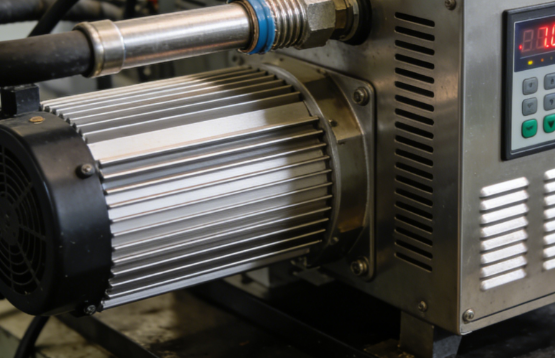
There are significant differences in barrel temperature control accuracy for different TPE types: Styrene-based TPE (SBC/TPR) has good thermal stability, with temperature fluctuation ≤±3℃ in each section and temperature difference between sections controlled at 20℃~30℃ to avoid uneven soft segment swelling caused by local overheating; TPU molecular chains are prone to high-temperature degradation and yellowing, with fluctuation strictly ≤±2℃ and no overheating by more than 5℃ allowed in the high-temperature nozzle section; TPO and TPEE are controlled at ±3℃~±4℃ to balance plasticization efficiency and thermal stability. In practice, thermocouples must be closely attached to the inner wall of the barrel, and barrel deposits shall be cleaned regularly to prevent indirect temperature instability caused by deposit degradation.
2. Melt Temperature
Melt temperature is the actual processing temperature of TPE injection molding, which directly determines melt viscosity, molecular chain entanglement state and hard segment crystallization effect. Its stability requirement is stricter than barrel temperature, with the fluctuation of actual value and set value controlled within ±1℃~±3℃. The benchmark melt temperatures for various types are clear: 160℃~200℃ for SBC, where fluctuation exceeding ±3℃ is prone to insufficient plasticization or surface material precipitation; 180℃~230℃ for TPU, where fluctuation exceeding ±2℃ will cause product bubbles, yellowing or reduced mechanical strength; 190℃~240℃ for TPO and 220℃~260℃ for TPEE, where fluctuation exceeding ±3℃ for both is prone to phase separation, leading to poor product elasticity and cracking. Melt temperature shall be real-time monitored at the nozzle by on-line temperature measuring devices with a detection frequency of not less than once every 30 minutes. The nozzle shall be insulated to avoid melt cooling and skinning, ensuring continuous temperature stability during injection.
3. Mold Temperature
Mold temperature affects TPE product cooling and setting, hard segment crystallization rate, surface gloss and demolding effect. The fluctuation of actual temperature and set value shall be controlled within ±1℃~±4℃ overall, and the local temperature difference on the mold surface shall be ≤5℃ to prevent product shrinkage, warpage, cold spots or sticking caused by uneven cooling. Mold temperature is controlled by TPE hardness grades: 30℃~50℃ for soft TPE (Shore A30~60) with fluctuation ≤±2℃, where over-high temperature causes sticking and over-low temperature leads to cold spots; 50℃~80℃ for medium-hard TPE (Shore A70~95/Shore D30 below) with fluctuation ≤±3℃, where moderate temperature promotes uniform hard segment crystallization and improves tensile strength and elastic recovery; 70℃~90℃ for hard TPE (Shore D30 above) with fluctuation controlled at ±4℃. In terms of hardware, mold cooling channels must be arranged at equal intervals without heat exchange dead angles, with the flow rate of cooling medium ≥0.5m/s. Mold temperature controllers can replace ordinary cooling water to improve control accuracy and stability.
4. Raw Material Pretreatment
Polar TPE (TPU, TPEE, etc.) has strong hygroscopicity. Water vaporization in raw materials at high injection temperatures causes bubbles, silver streaks and pinholes in products. Therefore, drying temperature stability is a key pre-control point, with the fluctuation of actual value and set value ≤±2℃ and the moisture content of dried raw materials controlled at ≤0.05%. The drying parameters for various types are clear: 80℃~100℃ for TPU, 100℃~120℃ for TPEE; non-polar SBC can be exempted from drying in dry storage environment, and dried at 60℃~80℃ if damp. The drying time for all types is 4~6 hours. In practice, the hopper shall be insulated at 80% of the drying temperature to prevent rapid moisture regain of dried raw materials in contact with room temperature air. Drying equipment adopts hot air circulation to ensure uniform internal temperature of the material layer and avoid insufficient or excessive local drying.
5. Whole-process Control
Temperature stability of TPE injection molding relies on the collaboration of equipment, process and on-line monitoring: High-precision temperature control systems with PID adjustment accuracy ≥±0.5℃ are selected for equipment, with independent temperature control modules for barrels and mold temperature controllers to avoid mutual interference; Standardized temperature parameter tables are formulated for processes according to TPE types, hardness and product structure, with no random temperature adjustment allowed during production. If adjustment is needed, it shall be carried out step by step at 5℃ each time, and production resumed after the temperature is stable for 30 minutes; A temperature record file is established for monitoring, with real-time temperatures of barrels, melt and mold recorded every hour, and temperature measuring devices calibrated every 3 months to ensure data accuracy. Meanwhile, the production environment temperature is controlled at 20℃~30℃ to avoid indirect temperature instability caused by uneven heat dissipation of barrels and molds due to excessive ambient temperature difference.
In summary, the core of TPE injection molding temperature stability control is "classification by type, full-process precision and small-range fluctuation". Temperature fluctuations in all links must strictly comply with industry precise standards. Combined with high-precision equipment, standardized processes and regular monitoring, processing defects caused by temperature out of control can be effectively avoided. At the same time, temperature parameters must be controlled collaboratively with injection pressure, holding time, cooling time and other parameters to form a matching process system, so as to give full play to the material properties of TPE and ensure that product performance meets the requirements of application scenarios.